April 19, 2026 • Callum Draper • 9 min reading time • Prices verified June 6, 2026
All-Grain Recipe Kits Worth Brewing: Hazy IPAs, Lagers, Hefeweizens, and When Kits Beat Building From Scratch
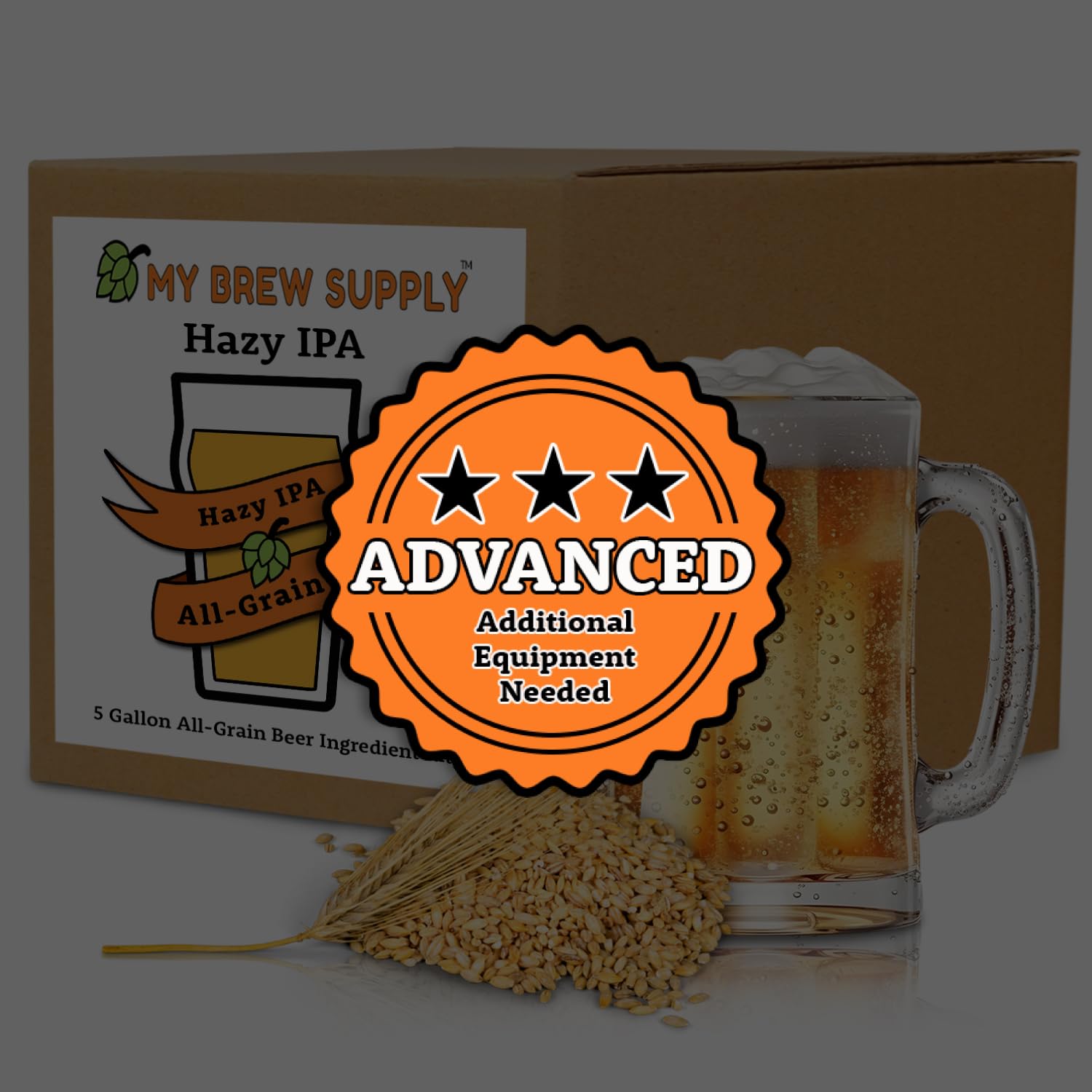
If you’ve ever bought a bag of specialty grains from your local homebrew shop and stared at a grain bill wondering “how much of this do I actually need,” you already understand the core value proposition of an all-grain recipe kit. A recipe kit is exactly what it sounds like: a brewery-designed package that includes every ingredient for a specific batch of beer — pre-weighed malted barley and specialty grains (the grain bill), measured hops, and often a recommended yeast strain — calibrated for a standard five-gallon batch. You supply the water, the equipment, and the labor. The kit supplies the recipe logic. For brewers who have graduated past extract brewing (where pre-processed malt syrup does the heavy lifting) and are now mashing whole grains themselves, kits offer a shortcut that isn’t always a compromise. This guide walks you through the styles where kits genuinely shine, the math on when they pencil out versus building from scratch, and the specific decisions that should push you toward — or away from — a kit on your next brew day.
When a Kit Actually Beats Scratch
The honest answer is that kits earn their keep in two scenarios: when specialty ingredients are hard to source individually in the right quantities, and when you’re brewing a style with a grain bill or hop schedule that punishes small measurement errors.
Rare and perishable ingredients. Hazy IPAs — also called New England IPAs or NEIPAs, a style defined by soft bitterness, fruit-forward hop aroma, and a permanently cloudy, unfiltered appearance — are the clearest example. A competitive hazy typically calls for three to five hop varieties, some of them newer proprietary cultivars like Cryo-branded pellets or experimental lots. Craft Beer & Brewing’s ingredient deep-dive on hazy IPAs notes that small homebrew quantities of high-demand varieties like Nectaron, Strata, or Idaho 7 are routinely sold out from individual vendors within weeks of the harvest cycle. A kit assembled by a supplier who bulk-purchases before the retail wave can actually give you reliable access to varieties you’d spend an hour chasing across three websites.
Multi-malt grain bills with tight ratios. Hefeweizens — the cloudy, banana-and-clove German wheat beers — call for a mash that is at least 50% malted wheat, often closer to 60–70%, with a protein rest (a lower-temperature pause during mashing to break down proteins for the right haze and head retention). Getting the wheat-to-barley ratio wrong by even 10% changes the fermentation character in measurable ways. Brew Your Own Magazine’s all-grain brewing feature emphasizes that style-accurate German wheat beers are among the most technique-sensitive grain bills for new all-grain brewers, specifically because of the multi-step mash and the way wheat proteins interact with fermentation. A kit pre-calculates those percentages and often includes style notes that shortcut a lot of trial and error.
The counter-case: where scratch wins. If you’re brewing a straightforward American pale ale, a dry Irish stout, or a basic English bitter — styles built on two or three malt components with simple hop additions — building from scratch at a homebrew shop is almost always cheaper and teaches you more. BeerSmith’s recipe-building blog post makes the point that simple grain bills are where you learn to internalize the relationship between base malt, specialty malt, and final beer character. Kitting out a simple recipe is paying a convenience premium for a recipe you could absorb in 30 minutes of reading.
Style-by-Style Breakdown: What Kits Do Well
Hazy IPAs
This is the kit format’s strongest category, full stop. The reasons stack up:
- Hop variety logistics. As noted above, multi-variety hop schedules with short-harvest cultivars are genuinely difficult to source in one-ounce and two-ounce quantities without overpaying on shipping or buying more than you need.
- Water chemistry pre-sets. Competitive NEIPAs are brewed with soft, low-sulfate water that emphasizes chloride over sulfate — the opposite of a West Coast IPA profile. How To Brew’s water chemistry chapter explains the chloride-to-sulfate ratio as one of the most impactful single variables in hop perception. Better kit producers include a water adjustment card or salt pack calibrated to their recipe’s target profile, which is genuinely useful if you haven’t fully dialed in your water chemistry workflow yet.
- Yeast inclusion. London Ale III (Wyeast 1318) and Omega Yeast’s DIPA Ale are the workhorses of hazy fermentation — both produce the ester profile and haze-stable protein interaction the style depends on. Kits frequently bundle a fresh liquid yeast pitch, and liquid yeast freshness is a real variable. The Homebrewers Association’s getting-started guide flags that liquid yeast has a shelf life of roughly 3–4 months from manufacture date, and viability drops measurably after that. A kit assembled and shipped quickly often delivers fresher liquid yeast than a tube that has been sitting in a shop cooler for two months.
Lagers
Lager brewing — fermenting at cold temperatures (around 48–55°F) with bottom-fermenting yeast that produces a clean, crisp, low-ester profile — is where many intermediate all-grain brewers have their first genuinely humbling experience. The grain bills are simple (often just Pilsner malt and a touch of Munich or Vienna), but the process punishes shortcuts.
The Brulosophy exBEERiment archive on fast-fermented lagers is worth reading in full for anyone in this space — their data across multiple trials suggests that modern lager strains handled at slightly elevated temperatures with a proper diacetyl rest (a brief warm period near the end of fermentation to let the yeast clean up a buttery off-flavor compound) produce results statistically indistinguishable from traditional cold-lagered versions in triangle-test panels. That’s relevant to kit selection because it changes which yeast you want: W-34/70 (Fermentis Saflager) dry yeast performs reliably in fast-ferment protocols and is often included in lager kits, making the process more accessible without sacrificing the clean finish.
Where lager kits add value: Pilsner malt quality varies more than any other base malt category. German-origin Pilsner malt (Weyermann, Best Malz) behaves differently in the mash and produces different DMS (dimethyl sulfide, a cooked-corn flavor) risk than domestic equivalents. Kits from reputable suppliers typically specify origin, and owners across homebrew forums consistently note that German Pilsner kits from suppliers like MoreBeer or Northern Brewer produce a noticeably cleaner wort than the same recipe assembled with an unspecified domestic Pilsner malt.
Hefeweizens
Hefeweizens reward the kit format for one specific reason: the yeast strain is everything, and the strain plus its pitch rate plus fermentation temperature together determine whether your beer smells like banana runts or clove-forward spice. Wyeast 3068 (Weihenstephan) and White Labs WLP300 are the canonical choices. The banana compound (isoamyl acetate) is emphasized at lower fermentation temperatures (62–64°F) and higher pitching rates; clove (4-vinyl guaiacol) comes forward at warmer temps and under-pitching. Craft Beer & Brewing’s German wheat beer coverage notes that this flavor dial is so responsive to fermentation variables that two brewers using the same grain bill and same yeast can produce dramatically different results based purely on temperature management.
A good hefeweizen kit will tell you exactly which protocol to follow for the flavor profile it was designed around. That’s the value: not the grain bill (two malts, a specific ratio, a protein rest), but the fermentation roadmap attached to a known yeast strain and a defined flavor target.
The Cost Math
By the numbers — five-gallon all-grain kit vs. scratch (2026 market)
| Scenario | Typical Cost Range |
|---|---|
| All-grain recipe kit, hazy IPA (grain + hops + yeast) | $45–$75 |
| Same recipe built from scratch, grain + hops from bulk | $30–$55 |
| Premium kit with liquid yeast + water chemistry pack | $65–$90 |
| Scratch build with liquid yeast ordered separately | $50–$70 |
The kit premium is roughly $10–$20 on a standard five-gallon batch, and it narrows considerably when liquid yeast is included. For a $45 dry-yeast kit, the scratch build offers meaningful savings if you already know the recipe and have spare hops. For a $75 liquid-yeast hazy kit with three specialty hop varieties, the gap often disappears when you account for shipping on individual hop orders.
BeerSmith’s recipe-building documentation notes that per-ounce pricing on specialty hops from retail homebrew vendors runs roughly 1.5–2× higher than the per-ounce cost embedded in bulk-purchased kits from larger suppliers — because those suppliers buy at commercial volume and pass some of the margin through. That’s not universal, but it’s the pattern owners report when they’ve done the math side by side.
Decision Rules: Kit or Scratch?
Here’s the framework, stated plainly:
Buy the kit if:
- You’re brewing a hazy IPA and the hop schedule calls for three or more varieties, at least one of which is a recent/experimental cultivar
- You’re brewing a hefeweizen or lager for the first time and you want a documented fermentation protocol attached to a specific yeast strain
- The kit includes liquid yeast and you’re not set up to make a yeast starter (a small pre-fermentation to build up yeast cell count) on demand
- You’re scaling up from extract and want a validated all-grain recipe to calibrate your new system against before you start experimenting
Build from scratch if:
- The grain bill is three or fewer components and the hops are widely available year-round (Cascade, Centennial, Citra, Mosaic in standard quantities)
- You have partial hop inventory you want to use and a recipe-building tool like BeerSmith or Brewfather open
- You’re iterating on a house recipe — small adjustments to your own base are exactly the situation where scratch builds teach you more
- You’ve already brewed the style twice and know your system’s efficiency well enough to trust your own calculations
The honest meta-rule: kits are most valuable early in your all-grain journey and whenever the ingredient logistics are genuinely harder than the recipe itself. The more confident you are in your system’s mash efficiency, your water chemistry, and your access to ingredients, the less you need someone else’s kit logic. But “less you need it” is not the same as “never worth it” — even experienced brewers report buying kits for styles they brew infrequently because the recipe maintenance cost isn’t worth it for a once-a-year lager.
Start with a kit that matches a style you already love drinking. Brew it once. Note where your numbers diverged from the kit’s projections — original gravity, mash efficiency, final attenuation. Then decide whether the next batch earns a scratch build or another pass at the same kit with your own adjustments layered in. That’s the upgrade path, and it works whether you’re on a basic kettle setup or a Grainfather G30.